
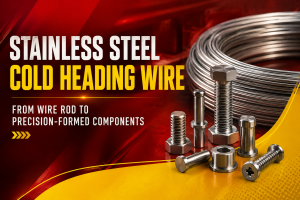
A finished stainless steel fastener may look simple, but its dimensional accuracy, surface quality and forming reliability are influenced by what happened to the steel long before it entered the… Read more
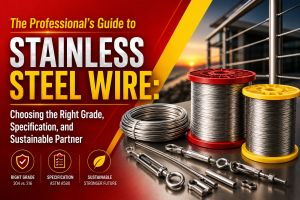
I. Introduction: The Billion-Dollar Question If you’ve spent any time sourcing stainless steel wire, you’ve probably typed some version of this into a search bar at 11 p.m.: “What’s the… Read more
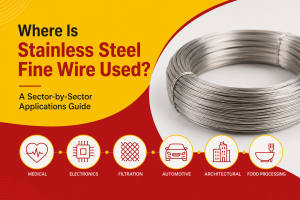
Why Sector Matters as Much as Grade Buyers researching stainless steel fine wire applications usually already have a component sketched out, just not a fixed grade or diameter yet. That… Read more
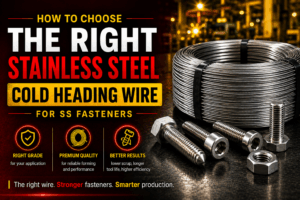
The quality of every stainless steel fastener — every bolt, screw, nut, rivet, and stud that holds machinery, infrastructure, and equipment together — begins long before the forming machine starts.… Read more
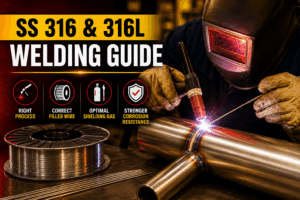
Stainless steel 316 and 316L are among the most weldable austenitic grades — but “weldable” does not mean “forgiving.” Get the process, filler, or heat input wrong and you will… Read more
Introduction of Stainless Steel Fine Wire Selecting the correct stainless steel grade for fine wire applications is not a cosmetic decision — it directly determines corrosion performance, mechanical life, weldability,… Read more
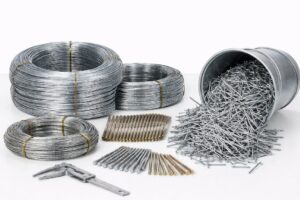
Nail Wire plays a vital role in construction, packaging, furniture, and woodworking industries. When buyers choose the right Nail Wire, they improve product strength, finish, and durability. Because quality directly… Read more
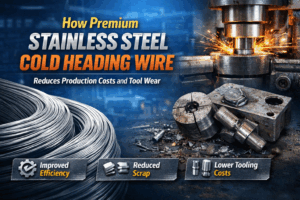
In today’s competitive manufacturing environment, efficiency and consistency determine profitability. Industries such as automotive, construction, electronics, and heavy engineering rely heavily on fasteners and precision components produced through cold forming… Read more
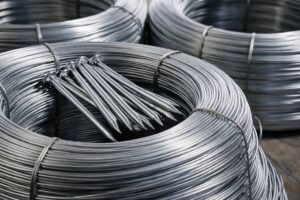
Nail wire is the core material used to make nails for construction, furniture, and industrial use. In simple terms, nail wire is drawn steel wire that gets cut and shaped… Read more