Whether you’re fabricating food-grade equipment, building chemical plant piping, or constructing marine-grade structures, the quality of your stainless steel MIG wire can make or break the weld. In this comprehensive guide, we cover everything you need to know — from MIG wire material and sizes to spool selection and how to choose the right MIG wire manufacturer in India.
What Is Stainless Steel MIG Wire?
Stainless steel MIG wire (also called SS MIG wire or stainless MIG wire) is a continuous solid filler metal used in the MIG (Metal Inert Gas) welding process — technically known as GMAW (Gas Metal Arc Welding). During welding, the MIG wire feeds automatically through the welding torch, melts under the heat of an electric arc, and fuses with the base metal to create a strong, corrosion-resistant joint.
Unlike a MIG welding rod (used in stick welding), MIG wire is supplied on spools and feeds continuously, making the process faster and more suitable for automated and semi-automated welding applications. Stainless steel MIG welding wire is specifically engineered to weld stainless steel to stainless steel, or stainless steel to dissimilar metals like mild steel.
MIG Wire Material: What Is Stainless Steel MIG Wire Made Of?
The MIG wire material directly determines the quality, strength, and corrosion resistance of your weld. Stainless steel MIG welding wire is composed of iron as its base, combined with key alloying elements:
- Chromium (10.5%–30%): Provides oxidation and corrosion resistance
- Nickel (up to 35%): Enhances ductility, toughness, and resistance to harsh environments
- Molybdenum (up to 4%): Improves pitting and crevice corrosion resistance (especially in 316 grades)
- Silicon: Improves weld fluidity and reduces spatter (especially in ‘Si’ grades like ER308LSi)
- Carbon (low levels in ‘L’ grades): Keeps intergranular corrosion in check
The precise chemical composition of the MIG welding wire material is what makes it compatible with specific base metals and suitable for different service environments — from food processing equipment to offshore structures.
Common Grades of Stainless Steel MIG Welding Wire
Choosing the right grade of stainless steel MIG wire is as important as choosing the right technique. Here are the most widely used grades:
| Grade | Best For | Key Feature |
| ER308 / ER308L | Welding 304 & 304L SS | Standard workhorse; ‘L’ grade offers lower carbon for better corrosion resistance |
| ER308LSi | Smooth bead profile applications | Extra silicon improves weld appearance and fluidity |
| ER309 / ER309L | Dissimilar metal welding (SS to mild steel) | Buffer layer and transition joints |
| ER316 / ER316L | Marine, chemical, pharmaceutical | Molybdenum addition for superior pitting resistance |
| ER316LSi | Thin sheet welding, cosmetic welds | Improved bead wetting and low spatter |
| ER347 | High-temperature service | Niobium-stabilised for elevated temperature use |
| ER430 | Ferritic SS welding | Suitable for 430 grade base metals |
| 409Ti | Automotive exhaust systems | Titanium-stabilised ferritic grade |
MIG Wire Sizes: Choosing the Right Diameter
MIG wire sizes (diameter) directly affect heat input, deposition rate, and the quality of the finished weld. Stainless steel MIG wire is typically available in the following diameters:
- 60 mm: Thin sheet welding, precision components, light fabrication
- 80 mm: General-purpose welding on light to medium gauge stainless
- 00 mm: Medium fabrication, structural components, food equipment
- 20 mm: Heavy fabrication, thick plates, high-deposition applications
- 60 mm: Heavy industrial welding, pressure vessels, structural steelwork
As a general rule: use smaller MIG wire sizes (0.6–0.8 mm) for thin materials and precision work, and larger diameters (1.2–1.6 mm) for thick-section welding where higher heat input and deposition rate are needed.
MIG Welding Wire Spool: Understanding Packaging Options
MIG welding wire is supplied on spools in various sizes to suit different machines and production volumes. Common MIG welding wire spool options include:
- 1 kg (SD 100): Suitable for small jobs, repairs, and hobbyist use
- 5 kg (SD 200): Workshop and light industrial use
- 5 kg / 15 kg (SD 300 / BS 300 Basket Spool): Production welding and heavy industrial applications
Basket spools (BS 300) are particularly popular in automated welding lines because they offer high wire capacity, consistent feed performance, and fewer reel changes, boosting productivity in high-volume stainless steel welding operations.
Shielding Gas for Stainless Steel MIG Welding
The shielding gas used with stainless steel MIG welding wire plays a critical role in arc stability and weld quality. Recommended shielding gas mixtures include:
- 98% Argon + 2% CO₂: Most common choice — stable arc, low spatter, excellent corrosion resistance
- Tri-Mix (He + Ar + CO₂): Better penetration and arc stability on thicker sections
- Pure Argon: Occasionally used for ultra-clean cosmetic welds
Avoid high CO₂ mixtures (above 5%) with stainless steel MIG wire — excessive CO₂ causes weld oxidation, reducing corrosion resistance and weld aesthetics.
Where Is Stainless Steel MIG Wire Used? Key Industries
Stainless steel MIG welding wire is a critical consumable across a wide range of industries in India and globally:
- Food & Beverage Processing: Tanks, piping, conveyors — ER316L is widely preferred for its hygiene-grade corrosion resistance
- Pharmaceutical & Chemical Plants: Process vessels, reactors, and heat exchangers where contamination must be eliminated
- Construction & Architecture: Structural frameworks, facades, railings, and decorative elements
- Automotive & Transportation: Exhaust systems, fuel tanks, and critical structural components
- Marine & Shipbuilding: Decking, fittings, and structural components exposed to saltwater environments
- Petrochemical & Oil & Gas: High-pressure piping, storage tanks, and subsea components
MIG Wire Manufacturers in India: Why the Market Is Growing
India is among the world’s top consumers and producers of stainless steel, and the demand for high-quality stainless steel MIG welding wire has surged correspondingly. Government initiatives like ‘Make in India’, rapid infrastructure expansion, growth in the food processing sector, and increased automotive production are all driving demand for premium-grade stainless steel welding consumables.
Leading MIG wire manufacturers in India are investing in advanced wire drawing, annealing, and quality control infrastructure to meet both domestic requirements and stringent export standards. Ambica Steels India Limited has positioned itself as a premier MIG wire manufacturer in India, producing SS MIG wires that comply with globally recognised standards including VdTUV 1153 and CPR 305.
How to Choose the Right MIG Wire Manufacturer
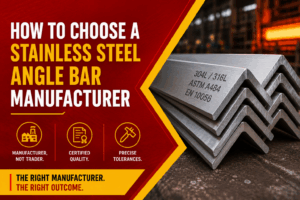
Not all MIG wire manufacturers are equal. Here’s what to look for when selecting a stainless steel MIG wire supplier:
- Certifications and Standards Compliance: Ensure the manufacturer meets international standards (e.g., AWS, EN, VdTUV)
- Grade Range: A broader portfolio (ER308, ER309, ER316, ER347, etc.) gives you flexibility for different applications
- Consistent Wire Quality: Check for smooth feedability, consistent diameter tolerance, and surface cleanliness
- Spool Options: Availability of multiple spool sizes (1 kg to 15 kg) for various production setups
- Technical Support: Ability to offer grade recommendations, custom solutions, and troubleshooting
- Delivery and Inventory: Reliable lead times and stock availability, including online ordering options
Why Ambica Steels Is a Trusted Stainless Steel MIG Wire Supplier
Ambica Steels India Limited has built a strong reputation among MIG wire manufacturers in India through decades of precision manufacturing and customer-focused service. Here’s what sets Ambica Steels apart:
- Wide Grade Portfolio: ER308, ER308L, ER308LSi, ER309, ER309L, ER309LSi, ER310, ER316, ER316L, ER316LSi, ER347, ER430, ER430LNb, 409Ti — covering virtually every stainless steel welding requirement
- Size Range 0.60 mm to 1.60 mm: Covering light sheet welding all the way to heavy structural applications
- Multiple Spool Options: 1 kg, 5 kg, 12.5 kg, and 15 kg spools (SD and BS basket types)
- International Certifications: VdTUV 1153 and CPR 305 compliant, meeting global buyer requirements
- Consistent Quality: Rigorous in-house testing ensures stable arc performance, smooth feedability, and low spatter
- Online Ordering (India): Indian buyers can check live inventory and place orders directly via Ambica.One
Stainless Steel MIG Wire vs Regular MIG Welding Wire: Key Differences
| Property | Stainless Steel MIG Wire | Mild Steel MIG Wire |
| Corrosion Resistance | Excellent | Low |
| Shielding Gas | Ar + low CO₂ | CO₂ or Ar/CO₂ |
| Cost | Higher | Lower |
| Applications | Food, chemical, marine | General construction |
| Dissimilar Metal Welding | Yes (ER309 grade) | Limited |
Tips for Getting the Best Results with Stainless Steel MIG Wire
- Match the wire grade to the base metal: Use ER308/308L for 304 SS, ER316/316L for 316 SS, and ER309/309L for dissimilar joints
- Keep heat input low: Stainless steel has lower thermal conductivity; excess heat causes warping and sensitisation
- Use the correct shielding gas: 98% Ar + 2% CO₂ is the industry standard for stainless MIG welding
- Store wire correctly: Keep spools in dry, clean storage away from moisture and carbon steel contamination
- Clean the base metal: Remove oil, scale, and contamination before welding to prevent porosity and inclusions
- Inspect wire feedability: Ensure the wire liner and drive rolls are compatible with stainless steel wire to prevent feed issues
Conclusion
Stainless steel MIG wire is a high-performance welding consumable that demands careful selection — the right MIG wire material, correct wire size, appropriate spool configuration, and matching grade for your base metal all contribute to a strong, clean, and corrosion-resistant weld.
As one of the leading MIG wire manufacturers in India, Ambica Steels combines decades of manufacturing expertise with rigorous quality control to deliver stainless steel MIG welding wire that performs consistently across the most demanding applications — from food processing lines to offshore platforms.
Ready to source premium stainless steel MIG wire? Visit our MIG Wire page.