For general-purpose woodworking dowels and pins, 304-family stainless steel cold heading wire (302HQ, 304, 304Cu) is the standard choice. It offers good corrosion resistance, consistent formability and a clean finish. Choose 316 for marine, outdoor or chemical-exposed wood joinery, and 410 when the pin must be hardened for wear or shear strength. Always confirm diameter tolerance, surface finish and mill test certification before ordering.
Key Takeaways
- Cold heading shapes wire into pins and dowels at room temperature, without cutting. The result is higher strength and less material waste.
- The grade must match the environment: indoor furniture, outdoor decking, marine woodwork and tool-making each need a different grade.
- Wire diameter tolerance and surface finish directly affect heading quality and tool life.
- Batch traceability and certified material protect export buyers from rejected lots.
What Is Stainless Steel Cold Heading Wire?
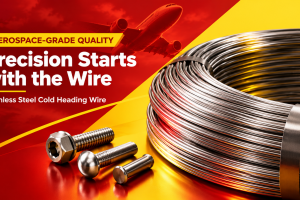
Stainless steel cold heading wire is drawn, annealed wire made specifically for cold forming. In a cold heading machine, wire is cut to length and struck by punches and dies at room temperature. The metal flows into the required shape, such as a pin head, a flanged dowel or a headed fastener.
Cold heading suits high-volume woodworking hardware because it:
- Produces pins and dowels with consistent dimensions across large runs
- Strengthens the part through work hardening
- Reduces scrap compared with machining from bar
- Maintains a smooth grain flow that resists cracking
Where Stainless Steel Dowels and Pins Are Used in Woodworking
Wooden dowels are common in joinery, but stainless steel dowel pins and pins serve applications where wood alone is not enough:
- Furniture and cabinet hardware: hinge pins, shelf support pins, alignment pins
- Outdoor and garden woodwork: decking, pergolas, fencing and benches exposed to moisture
- Marine woodwork: boat interiors, docks and fittings
- Jigs, fixtures and tooling: locating pins for CNC, router and assembly jigs
- Kitchen and food-contact joinery: chopping boards, utensil assemblies and counters where rust and staining are unacceptable
Stainless steel resists the tannic acids released by woods such as oak and teak, which can corrode and stain ordinary carbon steel.
How to Choose the Right Stainless Steel Cold Heading Wire Grade
1. 302HQ and 304 (general purpose)
The default for most woodworking pins. These austenitic grades offer good corrosion resistance, excellent cold formability and a bright finish. 302HQ (with copper) is widely used for cold heading because it work-hardens slowly, which extends die life.
2. 305 (severe cold heading)
Choose 305 when the part has a deep or complex head. Its lower work-hardening rate allows heavy deformation with a lower risk of cracking.
3. 316 and 316L (marine and outdoor)
Molybdenum improves resistance to chlorides and salt-laden air. Specify 316 for boat building, coastal projects and any wood assembly exposed to de-icing salts or chemicals.
4. 410 (hardened pins)
This martensitic grade can be heat treated to higher hardness. It suits locating pins and tooling pins that face wear or shear loads. Its corrosion resistance is lower than 304 or 316, so reserve it for indoor or protected use.
5. 430 (cost-sensitive, indoor)
Ferritic 430 is an economical option for indoor applications with mild exposure. It is magnetic and not suited to wet or coastal conditions.
| Grade | Corrosion Resistance | Cold Head-ability | Best Woodworking Use |
|---|---|---|---|
| 302HQ / 304 | Good | Excellent | General furniture, cabinet and joinery pins |
| 305 | Good | Best for severe forming | Complex headed pins |
| 316 / 316L | Excellent | Very good | Marine, outdoor, chemical exposure |
| 410 | Moderate | Good | Hardened locating and wear pins |
| 430 | Moderate | Fair | Indoor, cost-sensitive parts |
Five Specifications to Confirm Before You Order
- Diameter and tolerance: Tight, consistent wire diameter gives accurate pin fit in drilled holes. State the required tolerance class on the purchase order.
- Surface finish: Bright, lubricated or coated wire changes die wear and the finish of the final pin. Match the finish to your heading line and any plating or polishing step.
- Condition and mechanical properties: Annealed or soft condition improves formability. Confirm tensile range for your part design.
- Chemical composition and cleanliness: Low inclusion levels reduce heading cracks and burst defects.
- Certification and traceability: Request a mill test certificate with heat number. Certified quality systems add confidence for repeat and export orders.
Common Mistakes Buyers Make
- Using 410 or 430 for outdoor projects, which leads to surface rust
- Choosing wire by price per kilogram without checking tolerance, which raises rejection rates on the heading line
- Ignoring wood chemistry. Oak, cedar and teak accelerate corrosion in lower-grade steels
- Skipping a trial lot before approving a new wire source
Why Source Stainless Steel Cold Heading Wire from Ambica Steels
Ambica Steels Limited has manufactured and exported stainless steel since 1970. Headquartered in New Delhi, with a warehouse in Maastricht, the Netherlands, the company supplies customers in over 75 countries. Our operations are certified to ISO 9001:2015, IATF 16949:2016 and EN 9100:2018, which supports consistent quality, documentation and traceability for demanding B2B buyers.
We work with procurement managers, manufacturing engineers and distributors to match the grade, size and finish to the application. Share your drawing or pin specification, and our team will recommend a suitable grade and quote.
Request a Quote for Stainless Steel Cold Heading Wire
Frequently Asked Questions
What is the best stainless steel grade for woodworking pins? Grade 304 (including 302HQ) is the best general-purpose choice. Use 316 for marine or outdoor exposure and 410 when hardness is required.
Why use cold heading wire instead of bar for dowels and pins? Cold heading forms the part without cutting, which saves material, improves strength through work hardening and delivers consistent dimensions in large volumes.
Is stainless steel suitable for use with oak and teak? Yes. Stainless steel resists the acids in these woods, which can corrode and stain carbon steel. Choose 316 for added protection in damp or outdoor settings.
Is 304 or 316 stainless steel wire better for dowel pins? 304 suits indoor and general use. 316 is better when the pin is exposed to moisture, salt or chemicals.
What should I include in a wire enquiry? Grade, diameter and tolerance, condition, finish, quantity, packaging and required certificates.
Can Ambica Steels supply export orders? Yes. Ambica Steels supplies customers in more than 75 countries from New Delhi and its Maastricht warehouse.